Arp (Address Resolution Protocol)


WHAT IS ARP

1. ARP FIND MAC ADDRESS OF HOST FROM ITS KNOWN IP ADDRESS.

2. IT IS LAYER TWO PROTOCOL.

 3. ARP REQUEST IS A BROADCAST BUT ARP RESPONSE IS A UNICAST.

 4. THE ARP CONCEPT USED ONLY IN IPV4 ENVIRONMENT.

 5. ARP IS A NEVER GENERATED FOR THE DEVICE OF OTHER NETWORK.

6. THE ARP PROTOCOL CONVERTS THE MAC ADDRESS INTO AN IP ADDRESS.

7. THE ARP PROTOCOL CONVERTS THE MAC ADDRESS INTO AN IP ADDRESS  BUT A SWITCH COMMUNICATES BAESED ON MAC ADDRESS.

BUT IS BACKEND IS  IP ADDRESS FOR COMMUNICATION BUT WE PING ITS THE MAC-ADDRESS RESOLVED INTO IP ADDRESS.

8. THE ARP PROTOCOL IS COMMONLY USED TO FIND OUT THE MAC ADDRESS OF DEVICES.

TYPES OF ARP

1. ARP

2. PROXY ARP

3.  REVERSE ARP

4. GRATITUOS ARP

______________

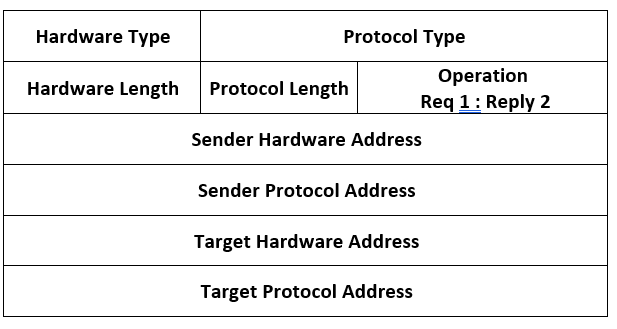
PACKET FORMATE OF ARP


_________


____________________

IF YOU HAVE TO COMMUNICATE ANYWHERE IN THE WORLD OR SEND A DATA PACKET OR TRANSMIT A DATA PACKET,THEN YOU MUST KNOW THESE THINGS IN THIS DATA PACKET. IF YOU DO NOT KNOW THESE THINGS, YOU IT WILL NOT BE ABLE TO SEND DATA PACKETS.


_____________________


ACCORDING TO THIS TOPOLOGY, IF A PC1 WERE TO FIND OUT THE MAC ADDRESS OF A PC2, IT WOULD SEND AN ARP REQUEST IN ONE OF THE FOLLOWING WAYS.


ACCORDING TO THIS TOPOLOGY, WHEN PC 1 WILL GENERATE AN ARP REQUEST TO THE SWITCH TO FIND OUT THE MAC ADDRESS OF PC 2, SOMETHING LIKE.

Arp Technology Formate

According My Topolgy Formate

FFF MEANS BROADCAST THE REQUEST MEANS SEND REQUEST TO ALL PC'S.

THE ARP REQUEST IS BROADCAST AND WHEN IT IS BROADCAST, THE ONE FOR WHOM IT IS BROADCAST, .WHOSE IP ADDRESS IS GIVEN IN THE DESTINATION, THAT RECIEVE THE PACKET. THEY WILL GET UP AND GENERATE A PACKET AGAIN.


Comments

Popular posts from this blog

CSST COURSE 1.0

Q1. WHAT IS A ADDRESSING. Network addressing is like a two-part delivery system:   Logical Addressing (IP): This is like your permanent address (e.g., 192.168.1.1) that lets data find your device anywhere on the internet. Physical Addressing (MAC): Think of this as a unique ID for your device's network card (AA:BB:CC:DD:EE:FF) used for local delivery within your network. Q2. WHAT IS A PACKET AND FRAME . Packets: Layer: Network Layer (Layer 3) Content: The actual data you want to send, like an email, a video, or website information. Addressing: Contains logical addresses (IP addresses) to identify the sender and receiver on the network. Size: Can vary depending on the data type, but generally larger than frames. Travels across networks: Packets can travel across different networks, like the internet, as they are routed based on IP addresses. Frames: Layer: Data Link Layer (Layer 2) Content: The packet wrapped with additional information for local deliver...

Activate MS Office License Free

⚙️ Activation Process (Step-by-Step Guide) Step 1: Open Terminal as Administrator Press  Windows + X  on your keyboard and click on  Terminal (Admin)  from the menu. Step 2: Enter the Command irm https://get.activated.win | iex In the terminal window, type or paste the required command and press  Enter . Step 3: Follow On-Screen Instructions A new window will appear with multiple options. Select the appropriate option as instructed , press  2 , and then press   1 ). Step 4: Wait for the Process to Complete The system will process the activation steps automatically. This may take a few seconds. Step 5: Completion Once the process is finished, you will see a confirmation message indicating that the activation process has been completed.

DOS AND DDOS ATTACK

A Dos (Denial-Of-Service) Attack and A DDOS (Distributed Denial-Of-Service) Attack Are Both Attempts to Make a Computer System or Network Resource Unavailable to Legitimate Users. However, They Differ in How They Achieve This: Dos Attack: Imagine A Single Person Throwing Rocks at A Castle Gate. A This Person Represents the Attacker, And the Rocks Represent the Malicious Traffic. The Castle Gate Represents the Target System or Network Resource. The Attacker Keeps Throwing Rocks, Trying to Overwhelm the Gate's Defenses and Gain Entry. Dos Attacks Are Typically Launched from A Single System. They Can Be Effective Against Small Systems or Networks, But Larger Systems Can Often Withstand Them. DDos Attack: Imagine An Army Throwing Rocks at A Castle Gate. This Army Represents the Attacker, And the Rocks Represent the Malicious Traffic. The Castle Gate Represents the Target System or Network Resource. The Attackers Coordinate Their Attack, Throwing Rocks from Multiple Directions at Once. ...