
Data Transmission


WHAT IS DATA TRANSMISSION

TRANSMISSION REFERS TO THE PROCESS OF TRANSFERRING THE DATA BETWEEN TWO OR MORE DIGITAL DEVICES IN ANALOG OR DIGITAL FORMAT. THIS DATA IS TRANSFERRED IN THE FORM OF BITS.
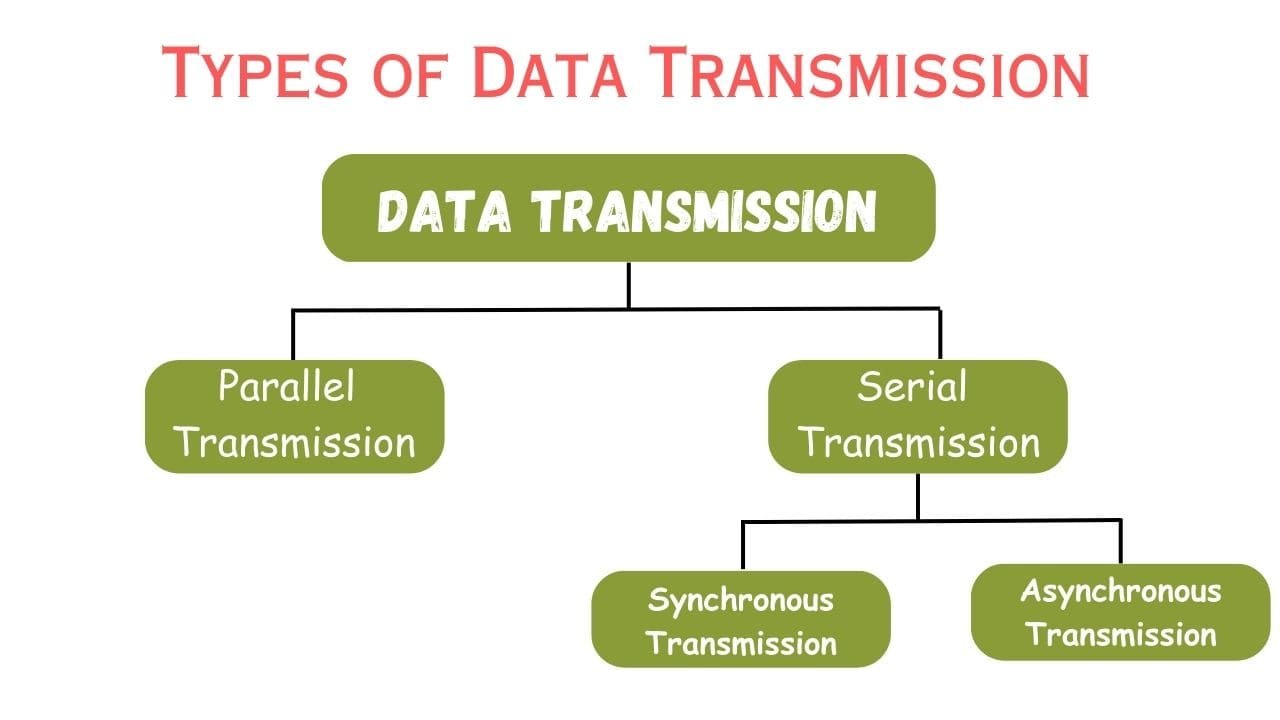
TYPES OF  DATA TRANSMISSION


PARALLEL  DATA TRANSMISSION

PARALLEL DATA TRANSMISSION SENDS MULTIPLE DATA BITS AT THE SAME TIME OVER MULTIPLE CHANNELS.
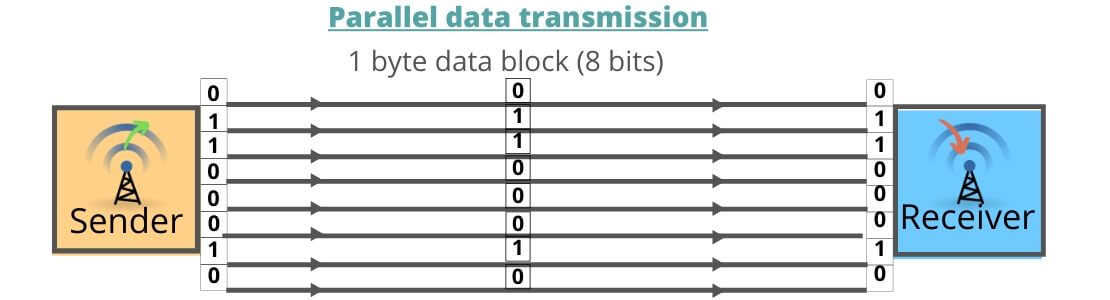

_______________

SERIAL DATA TRANSMISSION

SERIAL DATA TRANSMISSION SEND DATA BITS ONE AFTER ANOTHER OVER A SINGLE CHANNEL.


DIFFERENT BETWEN SERIAL VS PARALLEL  TRANSMISSION DIAGRAM

________________

SYNCHRONOUS TRANSMISSION

A LOT OF DATA IS SENT IN A BLOCK EACH BLOCK HAS MANY CHARACTERS.
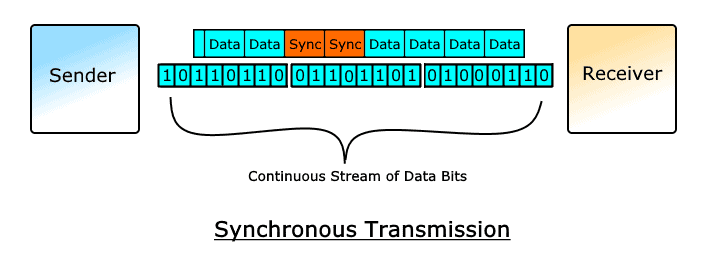

ASYNCHRONOUS TRANSMISSION 

ONLY ONE CHARACTER IS SENT AT A TIME WEATHER THAT A CHARACTER IS NUMBER OR ALPHABET IT USES START AND STOP BITS FOR TRANSFERRING DATA.
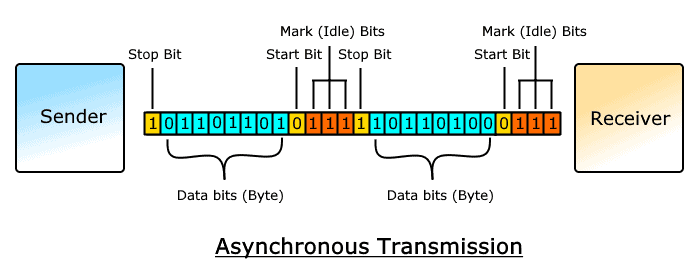


ASYNCHRONOUS VS  SYNCHRONOUS DIAGRAM


____________________

IF YOU WANT PDF IN URDU TRANSLATION OF THIS BLOG THEN CLICK ON "ABDUL MANAN JAVED"

Pop Out 

 BELOW AFTER CLICKING, A WINDOW WILL OPEN BELOW AND WHAT IS SHOWN IN THE IMAGE IS TO CLICK ON THE POP-OUT AND YOU WILL HAVE A PDF OPEN AND YOU CAN ALSO DOWNLOAD IT.


Comments

Popular posts from this blog

CSST COURSE 1.0

Q1. WHAT IS A ADDRESSING. Network addressing is like a two-part delivery system:   Logical Addressing (IP): This is like your permanent address (e.g., 192.168.1.1) that lets data find your device anywhere on the internet. Physical Addressing (MAC): Think of this as a unique ID for your device's network card (AA:BB:CC:DD:EE:FF) used for local delivery within your network. Q2. WHAT IS A PACKET AND FRAME . Packets: Layer: Network Layer (Layer 3) Content: The actual data you want to send, like an email, a video, or website information. Addressing: Contains logical addresses (IP addresses) to identify the sender and receiver on the network. Size: Can vary depending on the data type, but generally larger than frames. Travels across networks: Packets can travel across different networks, like the internet, as they are routed based on IP addresses. Frames: Layer: Data Link Layer (Layer 2) Content: The packet wrapped with additional information for local deliver...

Activate MS Office License Free

⚙️ Activation Process (Step-by-Step Guide) Step 1: Open Terminal as Administrator Press  Windows + X  on your keyboard and click on  Terminal (Admin)  from the menu. Step 2: Enter the Command irm https://get.activated.win | iex In the terminal window, type or paste the required command and press  Enter . Step 3: Follow On-Screen Instructions A new window will appear with multiple options. Select the appropriate option as instructed , press  2 , and then press   1 ). Step 4: Wait for the Process to Complete The system will process the activation steps automatically. This may take a few seconds. Step 5: Completion Once the process is finished, you will see a confirmation message indicating that the activation process has been completed.

DOS AND DDOS ATTACK

A Dos (Denial-Of-Service) Attack and A DDOS (Distributed Denial-Of-Service) Attack Are Both Attempts to Make a Computer System or Network Resource Unavailable to Legitimate Users. However, They Differ in How They Achieve This: Dos Attack: Imagine A Single Person Throwing Rocks at A Castle Gate. A This Person Represents the Attacker, And the Rocks Represent the Malicious Traffic. The Castle Gate Represents the Target System or Network Resource. The Attacker Keeps Throwing Rocks, Trying to Overwhelm the Gate's Defenses and Gain Entry. Dos Attacks Are Typically Launched from A Single System. They Can Be Effective Against Small Systems or Networks, But Larger Systems Can Often Withstand Them. DDos Attack: Imagine An Army Throwing Rocks at A Castle Gate. This Army Represents the Attacker, And the Rocks Represent the Malicious Traffic. The Castle Gate Represents the Target System or Network Resource. The Attackers Coordinate Their Attack, Throwing Rocks from Multiple Directions at Once. ...